Water softener repair in St. George, UT
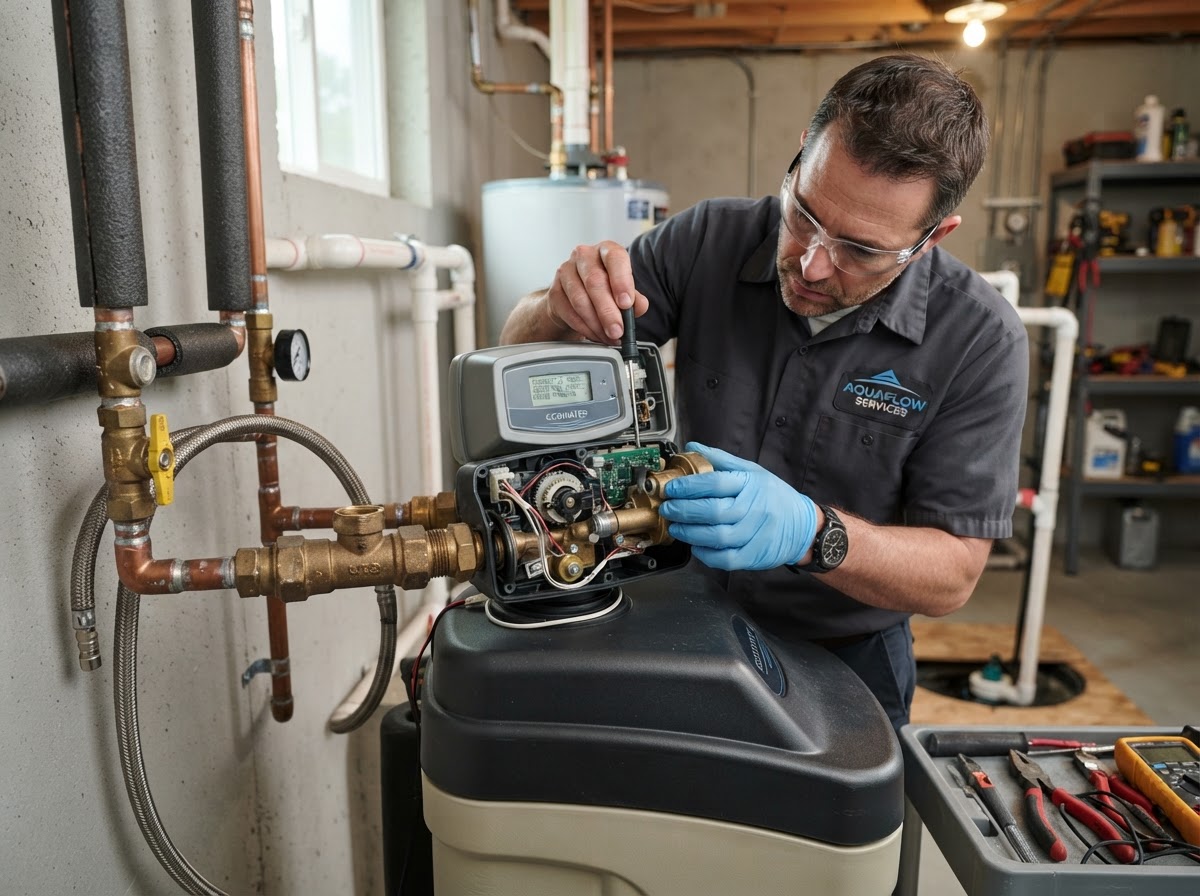
Water softener repair in St. George, UT resolves common operational failures—such as salt bridging, motor errors, injector clogs, and stuck control valves—that allow harsh desert minerals to return to your plumbing.
- Diagnostic inspection of control heads, timers, and brine draw
- Clear evaluation of repair costs vs. replacement economics
- Professional repair technicians provided by our service partner
Request a Repair Assessment
Share your symptoms to schedule diagnostic service with our local water-treatment partner.
Common Softener Symptoms in Southern Utah
Before calling for service, observing what your system is doing (or failing to do) helps technicians diagnose the issue quickly.
Salt Level Never Drops
If months pass and your brine tank remains full, a "salt bridge"—a hard crust of crystallized salt hovering above an empty space—may have formed, preventing brine creation. Alternatively, the brine injector may be clogged.
Brine Tank Overflowing
If water in the salt tank rises above the salt line or spills into the safety float, the brine draw cycle may have failed due to a cracked suction line, bad safety float, or clogged drain line.
White Spots Return to Glass
Sudden hardness breakthrough often indicates expired or chlorine-degraded ion exchange resin, a bypassed valve position, or incorrect meter programming following a power outage.
What details should you gather?
To make your diagnostic visit as productive as possible, check the following details on your equipment:
- Brand and Model: Located on the back or under the removable valve cover (e.g. Clack, Fleck, Autotrol, or proprietary brand).
- System Age: If known, check the installation tag or serial number date code. Most resin beds last 10–15 years in Utah municipal water.
- Error Code or Display State: Note any flashing error numbers (e.g., Error 1, Error 3, or blank screen).
Repair vs. Replace: How to Decide
A reputable technician will tell you honestly whether a repair makes financial sense. Here is how to evaluate:
When Repair Is Worth It
- • System is under 8–10 years old with a sound resin tank.
- • Issue is a simple component: salt bridge, clogged injector nozzle, broken motor gear, or power supply.
- • Replacement parts are commercially standard and readily available.
- • Repair cost is less than 35% of a new high-efficiency system.
When Replacement Makes More Sense
- • System is 12–15+ years old and using outdated time-clock regeneration.
- • Resin bead breakdown has occurred, causing yellow water or resin sand in faucets.
- • Proprietary big-box parts are obsolete or discontinued.
- • You want to upgrade to high-efficiency metered regeneration that cuts salt and water waste.
Softener Repair FAQs
How do I break up a salt bridge safely myself?
Gently push a blunt broom handle or wooden stick into the center of the salt bed. Do not use sharp metal tools that could puncture the plastic brine tank walls. If the crust gives way, carefully break it apart and initiate a manual regeneration cycle.
What does it mean if my softener constantly runs water down the drain?
Continuous drain discharge usually indicates a stuck piston, damaged internal seals and spacers, or a failed electrical switch that stopped the valve midway through backwash. Put the system into bypass mode immediately using the valve behind the unit to stop water waste until a technician arrives.