
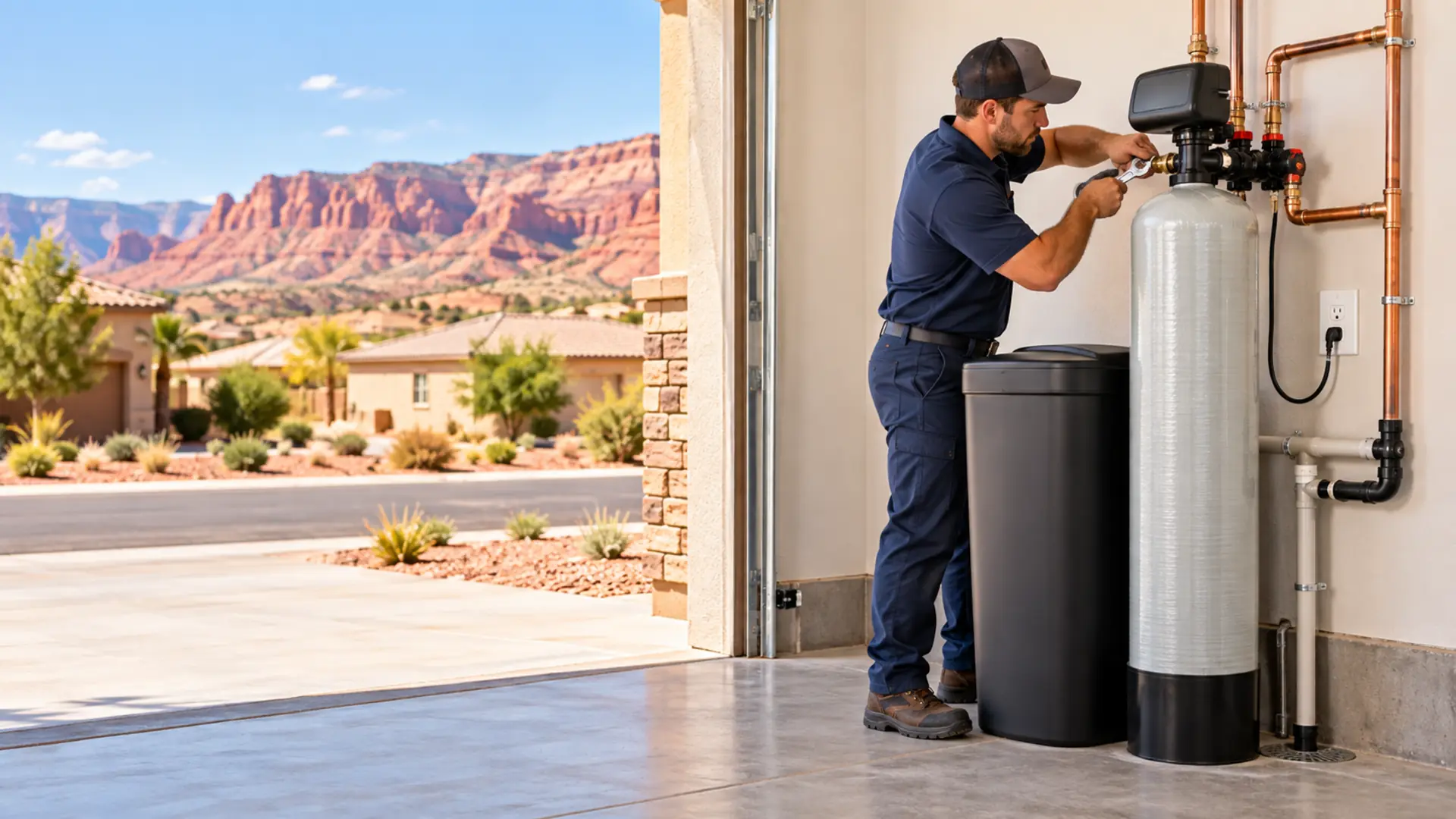
Water softener installation in St. George, UT
Water softener installation in St. George, UT starts with your home’s specific water chemistry and daily water use—not a one-size-fits-all big-box unit. Understand your sizing needs, loop configurations, and written estimate expectations before booking.
- Grain capacity matched to your measured hardness and household water use
- Proper plumbing loop, bypass valve, and drain arrangement
- Referral inquiries fulfilled by our service partner
Request an Installation Quote
Inquiries routed to our local water-treatment partner for site-specific proposals.
Start with the water. Then choose the system.
A water softener reduces dissolved calcium and magnesium ions through cation-exchange resin. Sizing an installation depends on two things you should confirm at the home: your water's measured hardness in grains per gallon (gpg) and your household's average daily water consumption.
Sizing also accounts for the selected salt setting, reserve capacity, regeneration schedule, and peak flow. Grain capacity and service-flow capacity are related but not interchangeable—the right system balances both so the resin does not exhaust too quickly and pressure is maintained when multiple fixtures run.
A pre-installation plumbing inspection, connection to existing cold water lines, three-valve or integrated bypass setup, air-gap drain line connection, electrical connection where required, system programming, resin sanitization, and a start-up leak check. Exact scope and charges should be confirmed in your written quote.
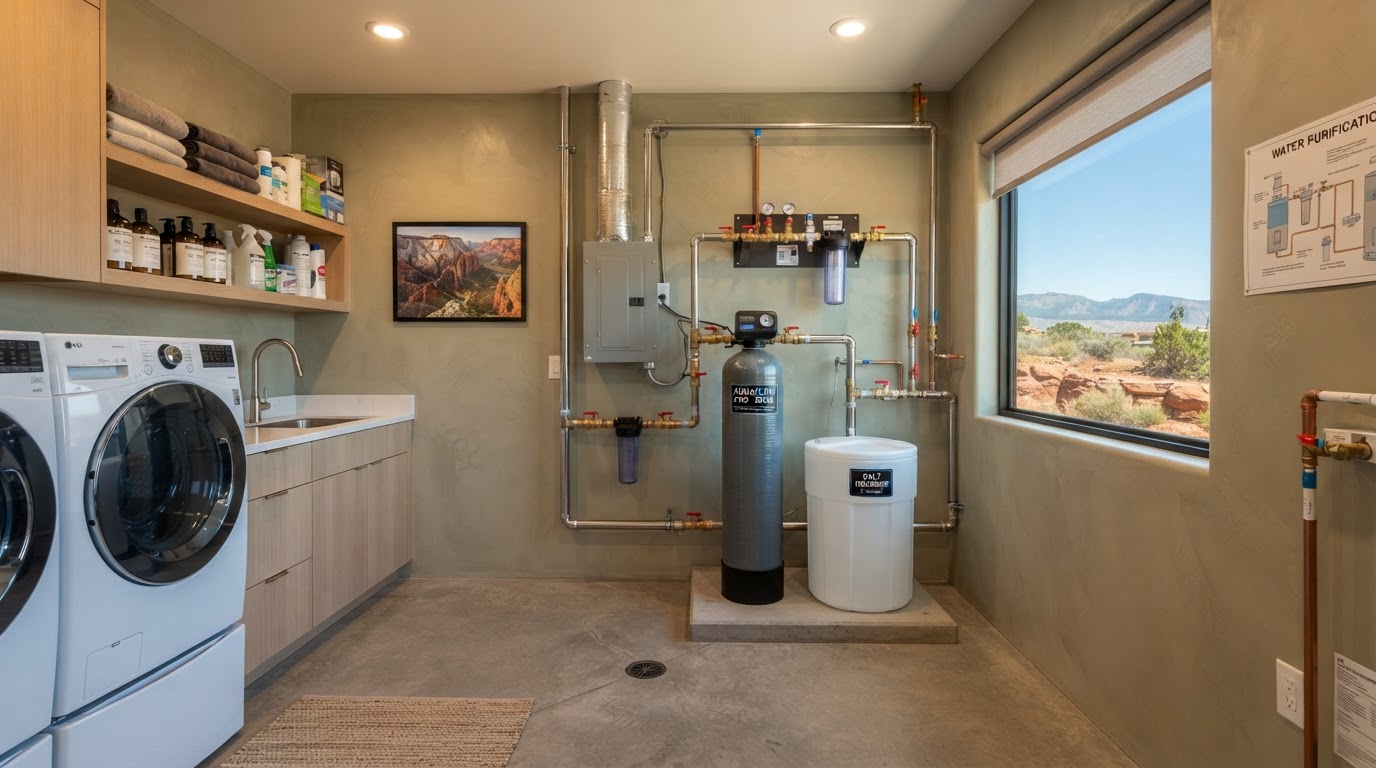
Is your home ready for a softener?
You do not need to be a licensed plumber to request help. The installation route depends primarily on whether your St. George home was built with a pre-plumbed loop.
Already Pre-Plumbed
Many newer homes in Washington County (built in the last 15–20 years) have a dedicated water softener loop—a looped copper or PEX pipe in the garage or utility room with a nearby drain and 120V electrical outlet.
- Usually requires less pipework than a first-time tie-in
- Often isolates outdoor hose bibs so soft water is not wasted on landscaping
- Installer verifies pipe diameter and shutoff integrity
No Loop — Or Not Sure
Older homes or custom floor plans may not have a loop. The installer will inspect the main water shutoff entry point, identify where the pipe splits to the water heater and cold fixtures, and plan a custom tie-in.
- Requires cutting into the main cold water line
- May require routing drain tubing to a laundry standpipe or floor drain
- Itemized in written quote prior to any plumbing work
What affects installation cost in Washington County?
We do not publish misleading "as low as" teaser prices. An accurate total installed price depends on equipment tier, plumbing readiness, and access.
| Cost Factor | Why It Matters | What to Look for in an Estimate |
|---|---|---|
| System Capacity (Grains) | Larger tanks and resin volumes cost more initially but regenerate less frequently, saving salt and water. | Confirmation of grain capacity (e.g. 32K, 48K, or 64K) and valve controller type. |
| Existing Loop Readiness | Pre-plumbed loops require minimal pipework. Homes needing new lines, penetrations, or drain runs require additional labor. | Itemized line item separating standard equipment connection from extra piping. |
| Drain & Power Access | Regeneration discharge must reach an approved drain with an air gap. A nearby 120V outlet is required for digital controls. | Confirmation that code-compliant air-gap drain and electrical hookups are included. |
| Removal of Old System | If replacing an existing expired unit, disconnecting, draining, and hauling away heavy water-logged brine tanks takes work. | Verify whether disposal and haul-away are included in the quote or optional. |
Water Softener Installation FAQs
How long does a typical installation take?
With a functioning pre-plumbed loop, installation usually requires less pipework than a first-time tie-in. If new piping, drywall access, or drain lines are needed, the job takes longer. Water service is only shut off for a portion of the appointment. Exact time should be confirmed by the provider.
What kind of salt should I use in St. George?
High-purity evaporated salt pellets (99.5%+ pure sodium chloride) or potassium chloride are recommended. High-purity pellets minimize insoluble residue and reduce the likelihood of salt mushing or bridging in Southern Utah's hot summer garage temperatures.
Who performs the installation when I submit a quote request?
Inquiries submitted through St. George Water Pros are fulfilled directly by our local water-treatment partner. The partner's technicians confirm scheduling, perform the plumbing work, and provide the official manufacturer and labor warranties.
Need to repair or replace an existing softener instead?
Compare our other service guides: